





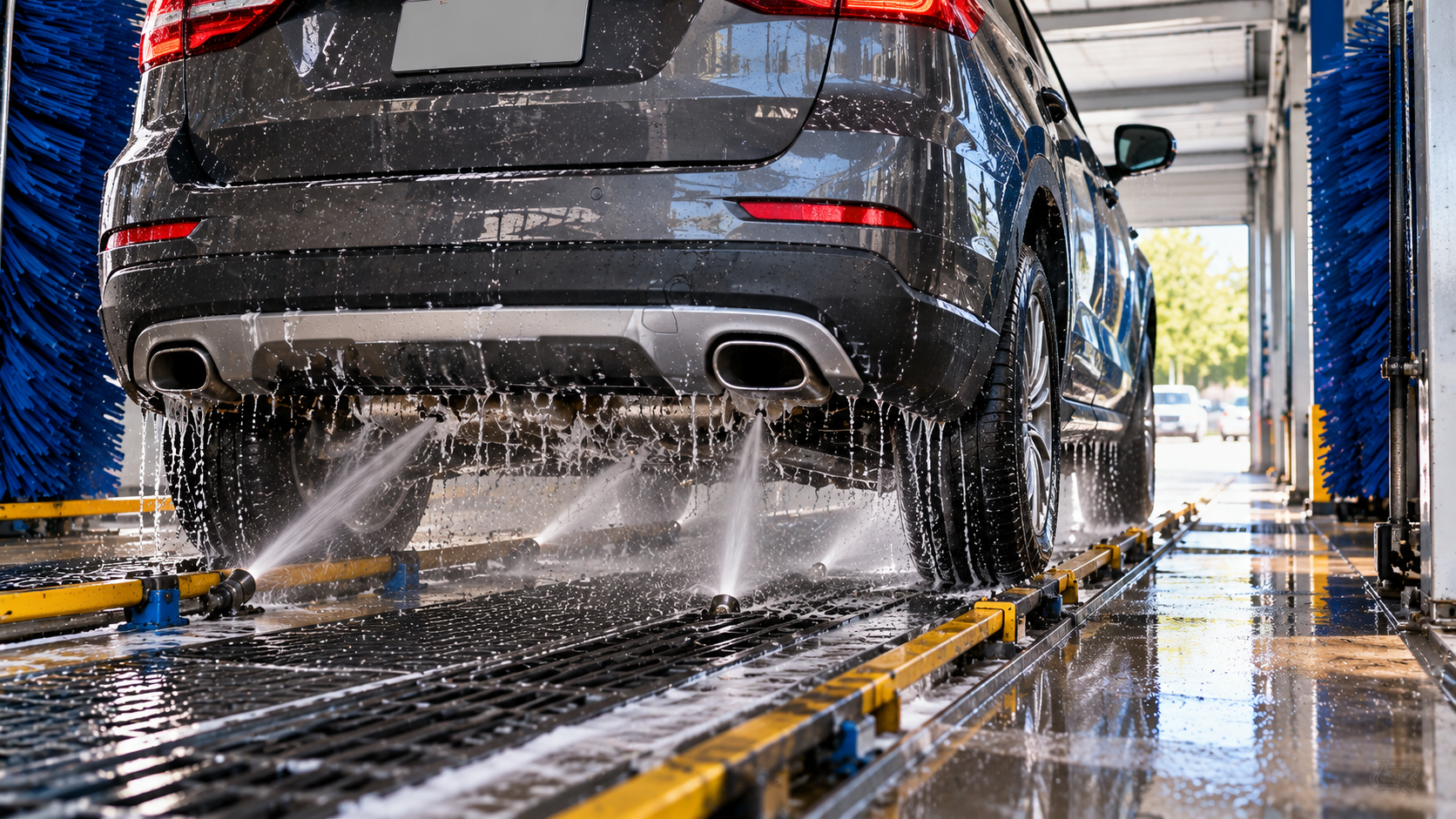
Most drivers judge cleanliness by what they can see. But some of the most important areas to clean are hidden underneath. An underbody car wash helps remove salt, mud, sand, slush, and road grime from parts of the vehicle that are difficult to reach during a standard wash.
- An underbody car wash removes salt, mud, sand, and road grime from areas that are difficult to clean by hand.
- Regular undercarriage cleaning is especially important in winter and in coastal or high-salt environments.
- Road salt and trapped moisture can contribute to corrosion when buildup is left in place for long periods.
- An underbody rinse works best as part of a complete vehicle care routine that also includes exterior washing and routine maintenance.
- Branford Carwash offers wash options that help drivers maintain both visible surfaces and hard-to-reach areas underneath the vehicle.
Why an Underbody Car Wash Deserves More Attention
Most drivers judge cleanliness by what they can see. If the paint looks good, the wheels are clean, and the windows are clear, the vehicle feels properly maintained.
But some of the most important areas to clean are hidden underneath.
An underbody car wash focuses on the underside of the vehicle, where road salt, mud, sand, slush, oil residue, and other contaminants can accumulate.
These materials are easy to ignore because they are not visible during normal driving, but they can remain trapped around structural components, suspension parts, wheel wells, and protective panels.
For drivers in Connecticut, this is especially important during winter, when roads are regularly treated for snow and ice.
A clean exterior may still hide significant salt buildup underneath the vehicle. Underbody cleaning helps make vehicle care more complete.
What Is an Underbody Car Wash?
An underbody car wash uses pressurized water to rinse the underside of the vehicle.
Instead of focusing only on doors, paint, glass, and wheels, the wash directs water underneath the car to remove buildup from areas that are difficult to reach during a standard home wash.
Depending on the wash system, an underbody rinse may target:
- Undercarriage panels
- Frame areas
- Suspension components
- Wheel wells
- Lower body sections
- Areas around exhaust components
- Road-facing surfaces underneath the vehicle
The goal is not to detail every mechanical component. It is to remove loose salt, mud, grime, and other contaminants before they remain in place for extended periods.
Why Road Salt Is a Major Concern
Winter road treatments make driving safer, but they can be hard on vehicles.
Salt and deicing materials can stick to:
- Lower body panels
- Wheels
- Wheel wells
- Suspension components
- Underbody surfaces
When salt remains on metal surfaces and combines with moisture, it can contribute to corrosion over time.
A single exposure does not mean immediate damage. The greater concern is repeated salt exposure combined with delayed cleaning.
This is why regular underbody washing is especially useful during winter and early spring.
How Often Should You Get an Underbody Car Wash?
There is no universal schedule for every driver, but frequency should increase when the vehicle is exposed to heavy salt, mud, or debris.
You may want an underbody rinse:
For many Connecticut drivers, waiting until spring for a single underbody wash may not be enough.
If road conditions are consistently salty, periodic rinsing throughout winter is more practical.
Why Winter Is the Most Important Season for Underbody Cleaning
Winter creates a combination of conditions that encourage buildup underneath a vehicle.
Snow and slush trap road contaminants. Moisture remains around lower components. Salt is repeatedly added to road surfaces.
That means the undercarriage can become coated even when the visible exterior does not look particularly dirty.
An underbody car wash helps reduce that buildup before it remains in place for weeks or months.
This becomes especially useful after:
- Snowstorms
- Freezing rain
- Road salting
- Long highway drives in winter
- Frequent commuting in wet conditions
Is an Underbody Wash Only for Winter?
No.
Winter is the season when underbody cleaning gets the most attention, but there are other situations where it can be useful.
Mud can collect around suspension components, wheel wells, and lower surfaces.
Salt in coastal environments can contribute to buildup, especially for vehicles parked or driven near the shoreline.
Dust, sand, and debris can settle underneath the vehicle.
Gravel, mud, and dirt can accumulate in areas that are difficult to inspect or clean.
Road spray can carry contaminants underneath the vehicle.
An underbody rinse can therefore be valuable throughout the year, depending on where and how you drive.
Underbody Car Wash vs. Standard Exterior Wash
A standard wash and an underbody wash serve different purposes.
| Service | Main Focus | Best For |
|---|---|---|
| Standard exterior wash | Paint, glass, wheels, visible surfaces | Routine appearance and cleanliness |
| Underbody car wash | Hidden lower surfaces beneath vehicle | Salt, mud, sand, road grime |
| Full-service wash | Exterior plus selected interior services | Ongoing overall maintenance |
| Detailing service | Deep cleaning and restoration | Stains, protection, appearance |
A standard exterior wash keeps the visible parts of the vehicle clean. An underbody rinse addresses the areas drivers rarely see.
For the best results, exterior washing and underbody rinsing should complement each other.
Can You Clean the Undercarriage at Home?
You can rinse some underbody areas at home, but it is not always easy.
Challenges include:
- Limited access under the vehicle
- Uneven water coverage
- Difficulty reaching the center of the undercarriage
- Cold weather
- Drainage concerns
- Lack of proper pressure or equipment
A professional wash system is designed to direct water underneath the vehicle more consistently.
That makes it a more convenient option, especially in winter.
How Underbody Cleaning Fits Into Complete Vehicle Care
Vehicle maintenance works best when different services support each other.
An underbody rinse handles contamination underneath the car, while other services address different needs.
A complete routine may include:
- Regular exterior washing
- Underbody rinsing
- Wheel and tire cleaning
- Interior vacuuming
- Oil changes
- Tire checks
- Seasonal maintenance
Drivers who want to combine routine maintenance with cleaning may also find value in the guide Oil Change and Car Wash: Why Combining Routine Maintenance Makes Sense.
Why Underbody Washing Matters for Long-Term Vehicle Care
An underbody rinse does not replace mechanical maintenance, but it can support long-term care by helping remove corrosive and abrasive contaminants.
Regular cleaning may help reduce prolonged exposure to:
- Salt
- Dirt
- Mud
- Sand
- Road residue
This is especially important because underbody areas are often overlooked during routine cleaning.
When buildup remains hidden, drivers may not realize how much contamination has accumulated.
Should You Use an Underbody Wash Before or After Winter?
Both can make sense.
Periodic rinsing helps remove fresh salt and slush before months of buildup occur.
A more thorough wash in early spring helps remove remaining residue from the season.
The best approach is not to think of underbody cleaning as a one-time seasonal event. Use it whenever road conditions justify it.
What About Rust Inhibitors?
Some wash packages may include a rust inhibitor or protective treatment as part of an underbody service.
These products are intended to provide an additional layer of protection, but they should not be viewed as a substitute for cleaning.
The proper sequence is simple:
Branford Carwash offers wash packages that include underbody and protective features in higher service tiers, making it easier to maintain the underside of the vehicle during harsh seasonal conditions.
Why Wheel Wells Need Attention Too
Wheel wells collect some of the heaviest road contamination.
They are constantly exposed to:
- Salt
- Brake dust
- Mud
- Sand
- Water spray
- Road grime
Because they are directly behind the tires, contaminants are repeatedly thrown into these areas.
A good wash routine should include wheel wells as well as the central undercarriage.
How Often Should You Wash Your Car in Winter?
Winter washing should be more frequent than many drivers assume.
If roads are regularly treated with salt, washing once a month may leave contaminants sitting on the vehicle too long.
A better approach is to wash:
- After heavy salt exposure
- After significant snow events
- During stretches of wet winter weather
- Whenever visible salt residue appears
The guide How Often Should You Wash Your Car? Seasonal Tips explains how weather and seasonal conditions affect wash frequency throughout the year.
Is Frequent Washing Safe?
Yes, when the wash system is properly maintained and designed for regular vehicle care.
A common misconception is that frequent car washing harms paint or vehicle surfaces.
In reality, leaving contaminants such as salt, bird droppings, sap, and road grime on a vehicle for extended periods can create greater problems.
The key is using appropriate equipment and proper cleaning methods.
For more information, read Are Car Washes Bad for Your Car? Myths, Facts & How to Wash Safely.
Underbody Cleaning and Road Salt: The Environmental Side
Road salt does not disappear once winter ends. It can move into soil and waterways through runoff.
The U.S. Environmental Protection Agency has discussed the environmental impact of road salt and chloride contamination, particularly when large amounts enter surface water and groundwater.
Drivers can learn more from the U.S. Environmental Protection Agency.
Professional car wash facilities also generally manage wastewater differently from washing in a driveway, which can help keep contaminated runoff from flowing directly into storm drains.
When Should You Prioritize an Underbody Car Wash?
Consider underbody cleaning a priority when:
These conditions increase the likelihood of hidden buildup.
Signs Your Vehicle May Need an Underbody Rinse
Because the underside of the car is difficult to see, drivers often need to rely on conditions rather than appearance.
Useful clues include:
- Visible salt residue along lower body panels
- Mud buildup in wheel wells
- Recent winter storms
- Frequent highway driving
- Heavy road spray
- Gravel or construction-road exposure
If the exterior is coated in road grime, there is a good chance the underside has been exposed too.
Clean More Than What You Can See
Choose a wash package that helps remove road salt, grime, and seasonal buildup from both visible surfaces and hard-to-reach areas underneath your vehicle.
FAQs About Underbody Car Washes
What does an underbody car wash clean?
It rinses salt, mud, sand, and road grime from lower surfaces underneath the vehicle.
How often should I get an underbody wash?
Frequency depends on road conditions. During winter, you may want one after heavy salt exposure or major storms.
Is an underbody wash worth it?
For drivers exposed to road salt, mud, or coastal conditions, it can be a useful part of routine vehicle care.
Can an underbody wash prevent rust?
It can help reduce prolonged exposure to salt and contaminants, but it does not guarantee rust prevention.
Should I get an underbody wash after winter?
Yes. A spring rinse can help remove residue left from winter driving, but periodic cleaning during winter is even better.
Do Not Forget the Parts You Cannot See
A clean vehicle is not just about shiny paint and clear windows.
The underside matters too.
An underbody car wash helps remove salt, mud, sand, and road grime from areas that are difficult to reach during a standard wash. For Connecticut drivers, this becomes especially important during winter, when road treatments and slush can build up quickly.
The most effective approach is consistency.
Wash the exterior regularly, rinse the underbody when road conditions justify it, and combine cleaning with routine maintenance throughout the year.
Visit Branford Carwash to explore wash packages that include underbody cleaning and other protective services, and keep your vehicle cleaner from top to bottom.
Protect the Areas You Rarely See
Make underbody cleaning part of your regular vehicle care routine, especially during Connecticut’s winter months.
Latest Post
-
 Underbody Car Wash: Why Cleaning Beneath Your Vehicle Matters More Than You Think
October 6, 2026
Underbody Car Wash: Why Cleaning Beneath Your Vehicle Matters More Than You Think
October 6, 2026
-
 Express Oil Change Guide: Service, Oil Types & Best Practices
October 2, 2026
Express Oil Change Guide: Service, Oil Types & Best Practices
October 2, 2026
-
 Synthetic vs Conventional Oil: Pros, Cons & Cost
September 28, 2026
Synthetic vs Conventional Oil: Pros, Cons & Cost
September 28, 2026
