




An express oil change is designed to make one of the most important forms of routine vehicle maintenance easier to fit into a busy schedule. Understanding when your vehicle needs service, which oil it requires, and what warning signs to watch for can help protect your engine and keep routine maintenance manageable.
- An express oil change provides routine engine oil and filter replacement in a convenient service format designed to get drivers back on the road efficiently.
- Oil changes help maintain proper engine lubrication, manage contaminants, and protect moving engine components.
- The correct oil change interval depends on both time and mileage, along with the vehicle manufacturer’s recommendations and driving conditions.
- Warning lights, low oil levels, leaks, unusual smells, and engine noises can indicate that a vehicle needs attention.
- Synthetic and conventional oils have different characteristics, but the correct choice depends primarily on the specifications required by the vehicle manufacturer.
- Combining an oil change with other routine vehicle care, such as a car wash and basic maintenance checks, can make vehicle ownership more convenient.
- Keeping accurate maintenance records makes it easier to know when the next oil change is due.
What Is an Express Oil Change?
Oil changes are among the most familiar forms of vehicle maintenance, but familiarity can sometimes make them easy to overlook. Drivers know they need fresh oil periodically, yet questions about timing, oil type, warning signs, and service options are extremely common.
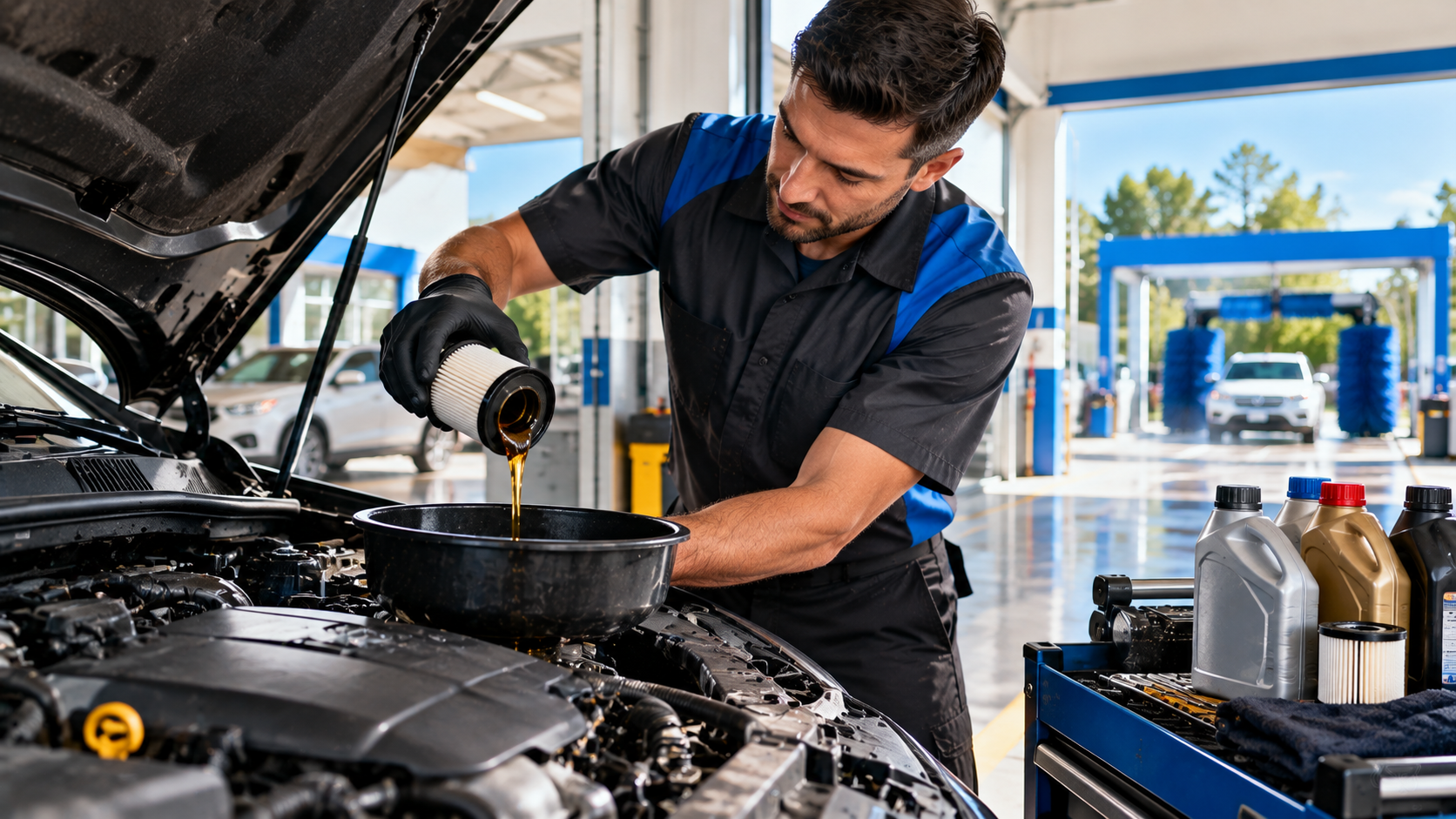
An express oil change is designed to make this essential maintenance easier to fit into a busy schedule. Instead of treating an oil change as a complicated maintenance event, express service focuses on efficiently replacing the used engine oil and oil filter while providing an opportunity to check other basic vehicle maintenance items.
For drivers in Branford and surrounding Connecticut communities, this can make routine maintenance much easier to manage.
Convenience should not mean ignoring the details. Understanding what an oil change does, when you need one, which oil your engine requires, and what to monitor between services can help you make better decisions about your vehicle.
Why Does Your Vehicle Need Engine Oil?
An internal combustion engine contains numerous components moving at high speeds and operating under significant heat and pressure.
Engine oil circulates throughout the engine to provide lubrication between those components.
Without adequate lubrication, friction between moving metal surfaces can increase dramatically.
Motor oil helps:
- Lubricate moving engine components
- Reduce friction and wear
- Carry heat away from certain components
- Suspend contaminants
- Reduce deposit formation
- Protect internal metal surfaces
- Support proper engine operation across different temperatures
Modern motor oil also contains additives designed to perform additional functions, including controlling oxidation, cleaning deposits, reducing foaming, and helping the oil maintain appropriate characteristics during operation.
Oil cannot perform these jobs indefinitely.
As the engine operates, the oil experiences repeated heating and cooling cycles. Contaminants accumulate, and the oil’s additive package gradually loses effectiveness.
Eventually, the used oil needs to be replaced.
What Happens During an Express Oil Change?
The exact service can vary by facility and vehicle, but the fundamental purpose remains the same: remove used engine oil and replace it with fresh oil that meets the engine’s requirements.
Removing the Used Oil
The existing engine oil is drained so aging oil and suspended contaminants can be removed.
Replacing the Oil Filter
The oil filter captures contaminants as oil circulates through the engine. Replacing it helps ensure fresh oil circulates through a clean filter.
Adding New Engine Oil
The engine is filled with the appropriate amount of oil meeting the manufacturer’s required viscosity and specifications.
Verifying the Oil Level
The oil level is checked after service to confirm that the proper amount has been added.
An oil change also provides a convenient opportunity to review other routine vehicle needs.
At Branford Carwash and Express Lube, drivers can explore available Express Oil Change Service and related vehicle maintenance options.
Why Is Changing Engine Oil So Important?
Engine oil works in a difficult environment. It is repeatedly exposed to heat, combustion byproducts, contaminants, and mechanical forces.
Fresh oil is designed to maintain the viscosity and performance characteristics required by the engine. As oil ages, those characteristics can change.
Repeatedly postponing oil changes can contribute to:
- Increased contamination
- Deposit formation
- Reduced lubrication effectiveness
- Increased internal friction
- Accelerated engine wear
- Potential mechanical problems
Oil changes are relatively simple compared with many engine repairs, which is why staying on schedule is such an important part of preventive vehicle maintenance.
How Do You Know When You Need an Oil Change?
The manufacturer’s maintenance schedule should be the primary guide, but drivers should also pay attention to changes in their vehicles.
Possible warning signs include:
- Oil-change or maintenance reminder
- Low oil level
- Visible oil leaks
- Burning oil smell
- Unusual engine noises
- Changes in performance
- Excessive exhaust smoke
- Oil-pressure warning
These symptoms do not always mean the solution is simply an oil change. A leak may require repair, an oil-pressure warning may indicate a more urgent lubrication problem, and unusual engine noise can have several mechanical causes.
For a closer look at what your vehicle may be telling you, read Signs You Need an Oil Change: What Your Vehicle Is Trying to Tell You.
Maintenance Reminders vs. Oil Pressure Warnings
Not every dashboard oil symbol means the same thing.
A maintenance reminder typically indicates that the vehicle has reached or is approaching a scheduled service interval.
An oil-pressure warning is different.
If a red oil-pressure warning appears while driving, continued engine operation could potentially result in damage if adequate lubrication is not reaching critical components.
Safely stop the vehicle and shut off the engine as soon as conditions allow, then follow the manufacturer’s instructions or seek professional assistance.
Do not treat a serious oil-pressure warning as simply another reminder to schedule an oil change next week.
How Often Should You Get an Express Oil Change?
There is no single oil-change interval that applies to every vehicle.
The appropriate interval can depend on:
- Manufacturer
- Model
- Model year
- Engine design
- Required oil specification
- Oil type
- Mileage
- Time
- Driving conditions
- Oil-life monitoring system
Older advice often treated oil changes as though every vehicle needed service after the same number of miles. Modern vehicles are more varied.
Your owner’s manual should be the starting point. Some engines and oil specifications support longer manufacturer-approved intervals than others, while certain driving conditions can affect the recommended schedule.
Oil Change Time vs. Mileage: Which Matters More?
Imagine two drivers.
The first drives 20,000 miles per year commuting long distances. The second works from home and drives only 3,000 miles per year.
Should they both determine oil changes using mileage alone? No.
Mileage tells you how far the vehicle has traveled. Time accounts for the fact that oil and its additives do not remain in ideal condition indefinitely simply because a vehicle is driven less frequently.
This is why manufacturers may provide both mileage and time recommendations.
If your manufacturer specifies both, follow its instructions regarding whichever threshold comes first.
Why Short Trips and Idling Matter
Short Trips
Drivers sometimes assume that a low-mileage vehicle automatically places very little demand on its oil. That is not always the case.
If most trips are only five minutes long, the engine repeatedly experiences startup and warm-up but may not remain at normal operating temperature for very long.
Some manufacturers classify repeated short trips as severe service and provide a corresponding maintenance schedule.
Idling
Your odometer may remain stationary while your vehicle idles, but your engine does not.
The engine continues operating, oil continues circulating, and fuel continues burning.
This can matter for:
- Rideshare drivers
- Delivery drivers
- Commercial vehicles
- Vehicles frequently stuck in traffic
- Work vehicles
- Vehicles that spend significant periods idling
What Is an Oil-Life Monitoring System?
Many newer vehicles use electronic oil-life monitors to help estimate when service is necessary.
Depending on the system, it may consider factors such as:
- Mileage
- Engine temperatures
- Trip length
- Engine starts
- Operating conditions
- Engine load
The system then estimates remaining oil life.
This can provide more personalized information than a simple fixed mileage reminder. However, an oil-life monitor should be used according to the manufacturer’s instructions.
Synthetic vs. Conventional Oil: What’s the Difference?
Oil type is another major consideration during an express oil change.
Conventional Oil
Produced from refined crude oil and combined with additives. It may be appropriate when permitted by the vehicle manufacturer and generally has a lower initial cost.
Full Synthetic Oil
Uses highly refined or engineered base oils designed for consistent performance under demanding conditions. Many modern vehicles require or recommend synthetic oil.
Synthetic Blend
Combines conventional and synthetic base oils to provide some characteristics associated with synthetic oil at a price that may fall between conventional and full synthetic products.
Synthetic vs. Conventional Oil Comparison
| Factor | Conventional Oil | Synthetic Oil |
|---|---|---|
| Initial cost | Generally lower | Generally higher |
| High-temperature performance | Good when properly specified | Generally stronger |
| Cold-temperature flow | Depends on formulation | Generally better |
| Oxidation resistance | Lower | Higher |
| Potential service interval | Often shorter | May support longer approved intervals |
| Modern engine use | Depends on specifications | Commonly required |
| Turbocharged applications | Only when approved | Frequently specified |
| Best choice | Manufacturer-dependent | Manufacturer-dependent |
The most expensive oil is not automatically the correct oil. The best oil is one that meets the viscosity and performance specifications required for your engine.
What Do Oil Viscosity Numbers Mean?
Motor oil containers display grades such as:
- 0W-20
- 5W-20
- 5W-30
- 10W-30
These numbers describe the oil’s viscosity characteristics under standardized conditions.
The first number followed by “W” relates to low-temperature performance. The second number relates to viscosity at the specified higher-temperature test condition.
Viscosity matters because engines are designed around specific lubrication requirements.
Always follow the viscosity specified by the vehicle manufacturer unless the manufacturer provides multiple approved options.
Does More Expensive Oil Mean Better Oil?
Not necessarily.
When selecting motor oil, prioritize:
- Manufacturer specification
- Required viscosity
- Required industry or manufacturer approvals
- Vehicle operating conditions
- Oil type
- Cost
Can You Switch Between Conventional and Synthetic Oil?
Many engines can switch between conventional and synthetic oils as long as the selected product meets the manufacturer’s requirements.
If your vehicle requires synthetic oil, continue using an approved synthetic product.
For an older engine with leaks, significant oil consumption, or other mechanical concerns, choosing a different oil should not replace diagnosing the underlying problem.
How Driving Conditions Affect an Express Oil Change Schedule
Long highway trips generally allow the engine to reach and maintain normal operating temperature.
City driving can involve frequent stops, idling, acceleration, and short trips.
Towing increases the load placed on the engine.
Very hot or cold conditions can create additional demands on motor oil.
Vehicles operating in dusty environments may require closer attention to filters and maintenance schedules.
If your driving regularly involves demanding conditions, check whether the manufacturer provides a severe-service schedule.
Why an Oil Change and Car Wash Work Well Together
Engine maintenance and vehicle washing serve completely different purposes, but combining them can make routine vehicle care much easier.
An oil change focuses on what is happening inside the engine.
A car wash focuses on contaminants accumulating outside the vehicle.
Regular washing can remove:
- Road salt
- Dirt
- Mud
- Pollen
- Bird droppings
- Bug residue
- Road grime
- Brake dust
For Connecticut drivers, this can be especially useful during winter when salt, sand, slush, and road grime accumulate quickly.
Instead of treating every vehicle-care task as a separate errand, combining an oil change and car wash can create a more convenient routine.
Why Car Washing Matters During Connecticut Winters
Winter can be particularly hard on vehicle exteriors.
Road treatments used during snow and ice events can accumulate around:
- Wheels
- Wheel wells
- Lower body panels
- Rocker panels
- Bumpers
- Areas underneath the vehicle
Washing periodically throughout winter can help remove salt and road grime as they accumulate.
What Other Maintenance Should You Consider?
An oil change provides a natural opportunity to think about other routine vehicle needs.
What Should You Check Between Oil Changes?
You do not need to wait for your next express oil change to pay attention to the engine oil.
If your vehicle has a traditional dipstick, periodically checking the oil can help identify:
- Low oil level
- Unexpected oil consumption
- Certain contamination concerns
The proper checking procedure varies by vehicle, so consult your owner’s manual.
Some newer vehicles use electronic oil-level monitoring instead of a conventional dipstick.
If the oil level repeatedly drops between services, do not simply continue topping it off indefinitely. Significant oil consumption or leakage may need professional diagnosis.
Common Oil Change Mistakes to Avoid
Routine maintenance should follow manufacturer recommendations rather than waiting for a problem.
Modern oil-change schedules vary considerably.
Low-mileage vehicles may still reach a time-based maintenance limit.
The numbers on the oil container matter. Use the viscosity specified for your engine.
Synthetic oil still requires replacement.
An engine can lose or consume oil before its next scheduled change.
Appearance alone does not provide enough information to determine remaining oil life.
Express Oil Change Maintenance by Driving Style
| Driving Style | What to Watch | Maintenance Consideration |
|---|---|---|
| Long-distance commuting | Rapid mileage accumulation | Mileage may trigger service first |
| Low-mileage driving | Calendar time | Time may trigger service first |
| Short local trips | Frequent startup cycles | Review severe-service recommendations |
| Heavy city traffic | Idling and stop-and-go operation | Monitor maintenance schedule closely |
| Highway driving | High mileage | Track mileage carefully |
| Towing | Increased engine load | Follow manufacturer guidance |
| Seasonal vehicle | Long periods parked | Do not ignore time-based service |
| Older vehicle | Oil consumption and leaks | Check oil level regularly |
How to Get the Most From an Express Oil Change
Know Your Vehicle’s Requirements
Check your owner’s manual for oil viscosity, oil specification, oil capacity, maintenance interval, and severe-service requirements.
Keep Records
After service, record the date and mileage. This makes it much easier to determine when the next oil change is approaching.
Mention Problems Before Service
Tell the service provider if you have noticed warning lights, oil spots beneath the vehicle, burning smells, unusual engine noises, or rapid oil consumption.
Do Not Ignore Other Maintenance
Use the opportunity to consider tires, filters, fluids, wipers, lights, and other scheduled items.
Build Maintenance Into Your Routine
Convenience makes consistency easier. If you can take care of an oil change, basic vehicle checks, and a car wash in one trip, routine maintenance becomes much less disruptive.
Make Routine Vehicle Care Easier
Combine essential engine maintenance with convenient vehicle care in Branford, Connecticut.
How Much Does an Express Oil Change Cost?
Oil change pricing can vary considerably.
Factors affecting cost include:
- Vehicle
- Engine oil capacity
- Conventional, synthetic blend, or full synthetic oil
- Required oil specification
- Oil filter
- Additional services
- Local labor and service pricing
Some larger engines require substantially more oil than smaller engines, which can increase the total service cost.
Synthetic oil also generally costs more than conventional oil.
Rather than choosing exclusively based on the lowest advertised price, make sure the service includes the correct oil and filter for your vehicle.
Is a More Expensive Oil Change Worth It?
Sometimes.
A higher price may reflect:
- Full synthetic oil
- Greater oil capacity
- Specialized oil specifications
- Different filter requirements
- Additional checks or services
The cheapest service is not necessarily the best value, and the most expensive option is not automatically necessary.
What Happens to Used Engine Oil?
Used motor oil should be handled responsibly.
Oil removed from an engine can contain contaminants accumulated during normal operation. It should never be poured onto the ground, into storm drains, or into household plumbing.
The U.S. Environmental Protection Agency explains that used motor oil can be recycled and re-refined into new lubricating oil or used for other appropriate purposes.
Professional oil-change facilities handle used oil as part of the service process, making proper disposal and recycling easier for vehicle owners.
Building a Complete Vehicle Maintenance Routine
Vehicle maintenance is easier when you have a repeatable system.
Pay attention to tire pressure, visible leaks, warning lights, and exterior condition.
Check oil level according to the manufacturer’s instructions.
Wash away salt, mud, pollen, bird droppings, and road grime.
Schedule your oil change and other required maintenance when recommended.
Consider tires, battery condition, wipers, fluids, and other items affected by weather.
Check tires, fluid levels, lights, and any maintenance approaching its due date.
The exact schedule varies by vehicle, but the underlying principle is simple: preventive care works best when it becomes routine.
Frequently Asked Questions About Express Oil Changes
What is an express oil change?
An express oil change is a convenient service focused on replacing used engine oil and the oil filter while minimizing the time required for routine maintenance.
How often should I get an oil change?
Follow the maintenance interval specified by your vehicle manufacturer. Consider both mileage and time, along with any severe-service recommendations that apply to your driving.
How do I know if my car needs an oil change?
Start with your manufacturer’s maintenance schedule. Maintenance reminders, low oil levels, unusual smells, leaks, and certain engine symptoms may also indicate that attention is needed.
Is synthetic oil better than conventional oil?
Synthetic oil generally offers stronger performance under temperature extremes and greater resistance to oxidation, but the correct choice depends on your engine’s specifications.
Can I switch from conventional to synthetic oil?
Many vehicles can use synthetic oil as long as it meets the manufacturer’s required viscosity and specifications. Check the owner’s manual before changing oil types.
Does synthetic oil mean I can wait longer between oil changes?
Only when the vehicle manufacturer allows a longer interval. Do not extend the interval simply because synthetic oil was used.
Does an oil change include a new filter?
Oil filter replacement is normally an important part of a complete oil change because the filter captures contaminants as oil circulates through the engine.
Should low-mileage cars still get oil changes?
Yes. When a manufacturer provides a time-based interval, a low-mileage vehicle can require an oil change before reaching its mileage limit.
Can I get an oil change and car wash at the same time?
A facility offering both services can make it convenient to address routine engine maintenance and exterior cleaning during the same visit.
What oil does my vehicle need?
Check your owner’s manual for the required viscosity and oil performance specifications. Requirements vary by engine and vehicle.
Make Express Oil Changes Part of Smarter Vehicle Care
An express oil change is a simple service, but it plays an important role in a much larger vehicle maintenance strategy.
The oil inside your engine works every time you start the vehicle. It lubricates moving components, helps manage heat and contaminants, and supports reliable engine operation. Keeping that oil and its filter on the proper replacement schedule is one of the most fundamental maintenance habits a driver can develop.
But effective maintenance goes beyond simply remembering to change the oil.
Know the signs you need an oil change. Understand oil change time vs mileage so low annual mileage does not cause you to overlook time-based service. Consider how an oil change and car wash can fit into a convenient overall vehicle-care routine. And understand synthetic vs conventional oil so you can choose an oil that meets your engine’s actual requirements rather than relying on price or assumptions.
For drivers in Branford and the surrounding area, Branford Carwash and Express Lube provides a convenient place to combine routine vehicle maintenance with regular car care.
A good maintenance routine does not need to be complicated. Follow the manufacturer’s recommendations, pay attention to your vehicle, keep accurate records, and address routine service before it becomes overdue.
Keep Your Vehicle Maintenance on Schedule
Explore convenient express oil change service and make routine vehicle care easier to manage.
Latest Post
-
 Underbody Car Wash: Why Cleaning Beneath Your Vehicle Matters More Than You Think
October 6, 2026
Underbody Car Wash: Why Cleaning Beneath Your Vehicle Matters More Than You Think
October 6, 2026
-
 Express Oil Change Guide: Service, Oil Types & Best Practices
October 2, 2026
Express Oil Change Guide: Service, Oil Types & Best Practices
October 2, 2026
-
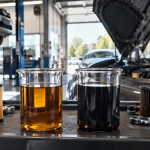 Synthetic vs Conventional Oil: Pros, Cons & Cost
September 28, 2026
Synthetic vs Conventional Oil: Pros, Cons & Cost
September 28, 2026
