



Key Takeaways
- A professional car odor eliminator addresses the source of odors instead of temporarily covering them up.
- Vehicle odors often become trapped in upholstery, carpet padding, vents, and headliners.
- Certain smells, including smoke, mildew, and food spills, can continue to return if underlying contaminants remain.
- Professional detailing uses specialized cleaning and odor-neutralizing methods to break down odor-causing particles.
- Regular interior maintenance helps prevent persistent smells from developing in the first place.
Why Does Your Car Still Smell Bad After Cleaning It?
You vacuum the carpets. You wipe down the dashboard. You install a new air freshener.
For a few days, everything seems fine.
Then the odor returns.
This frustrating cycle is one of the most common reasons drivers seek professional car odor eliminator services. Many vehicle owners assume that a bad smell is simply sitting on the surface. In reality, odors often penetrate deep into fabrics, foam cushions, ventilation systems, and carpeting where basic cleaning cannot reach.
The reason some smells keep returning has less to do with the scent itself and more to do with the source that remains hidden beneath the surface.
Understanding why odors persist can help drivers make smarter decisions about interior care and long-term vehicle maintenance.
How Odors Become Embedded in Vehicle Interiors
Unlike hard surfaces, many parts of your vehicle are designed to absorb sound, provide comfort, and regulate temperature. These same materials also absorb odors.
Common odor-trapping materials include:
- Cloth seats
- Carpet fibers
- Carpet padding
- Headliners
- Door panel fabrics
- Seat foam
- Air conditioning systems
Once odor-causing particles enter these materials, they can remain trapped for months or even years.
Simply spraying a fragrance into the cabin does not remove these particles. It only masks them temporarily.
Why Some Odors Are Harder to Remove Than Others
Not all odors behave the same way.
Some smells remain near the surface and are relatively easy to remove. Others bond to interior materials and become significantly more challenging.
The Most Persistent Vehicle Odors
| Odor Source | Difficulty Level |
| Fast Food Spills | Moderate |
| Coffee and Soft Drinks | Moderate |
| Pet Odors | High |
| Cigarette Smoke | Very High |
| Mold and Mildew | Very High |
| Sour Milk | Extremely High |
| Water Damage | Extremely High |
The longer these contaminants remain untreated, the deeper they penetrate into vehicle materials.
The Problem with Air Fresheners
Air fresheners are one of the most popular automotive products sold today. They are inexpensive, easy to install, and provide immediate results.
However, they are not true odor eliminators.
Think of an air freshener as a scented candle in a room with a leak. The fragrance may improve the environment temporarily, but it does not solve the underlying issue.
What Air Fresheners Actually Do
- Add a competing fragrance
- Temporarily overwhelm existing odors
- Improve short-term perception
What They Do Not Do
- Remove bacteria
- Eliminate mold
- Extract spills
- Clean upholstery
- Remove smoke residue
This is why odors often return shortly after the fragrance fades.
How Professional Car Odor Eliminator Services Work
Professional detailing approaches odor removal differently.
Rather than focusing on the smell itself, detailers focus on removing the source.
Step 1: Identifying the Cause
Before treatment begins, technicians determine where the odor originates.
Potential sources include:
- Stained carpet
- Moisture trapped beneath mats
- Food residue under seats
- Ventilation systems
- Upholstery contamination
Without identifying the source, even the best odor treatment may fail.
Step 2: Deep Cleaning
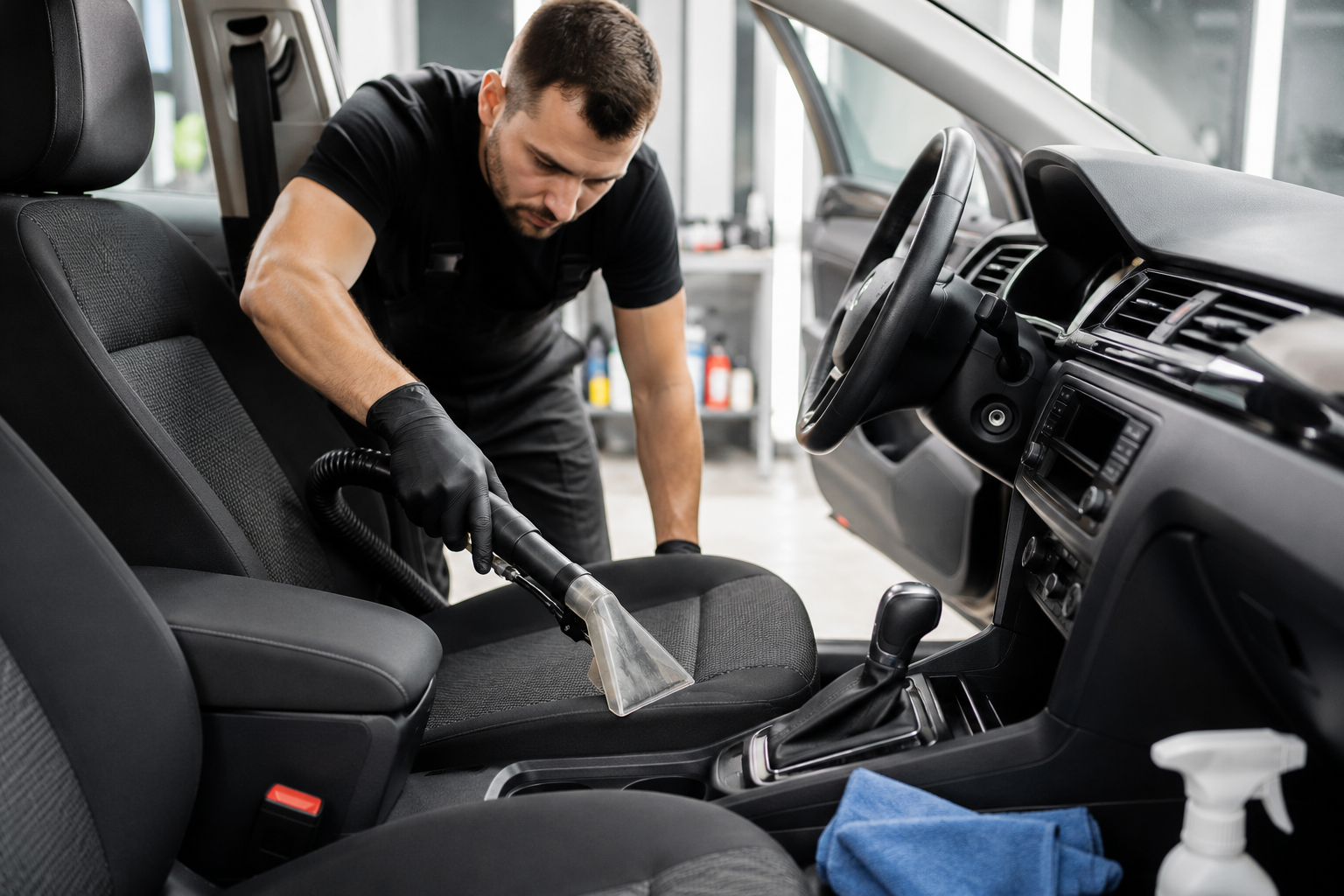
Once the source is located, deep cleaning begins.
This often includes:
- Carpet extraction
- Upholstery cleaning
- Interior surface treatment
- Vacuuming hard-to-reach areas
- Cleaning vents and air pathways
Removing physical contamination is often the most important part of successful odor elimination.
Step 3: Odor Neutralization
A professional car odor eliminator treatment uses products specifically designed to break down odor-causing molecules.
Unlike fragrances, these products chemically neutralize odor particles.
This process helps eliminate smells rather than cover them.
Common Hidden Sources of Vehicle Odors
Many drivers focus on visible areas while overlooking some of the most common odor sources.
Under the Seats
Dropped food, spills, and debris often accumulate underneath seats where they remain unnoticed for months.
Floor Mat Padding
Moisture can become trapped beneath removable floor mats, especially during winter.
Air Conditioning Systems
Mold and bacteria can develop within HVAC systems, creating unpleasant smells whenever the fan operates.
Spare Tire Compartments
Water leaks sometimes collect in trunk compartments without the driver’s knowledge.
Seat Foam
Liquids that penetrate seat fabric often soak into the foam beneath, creating long-term odor problems.
Why Moisture Is the Enemy of a Fresh Interior
Many persistent odors are moisture-related.
Water alone does not necessarily smell bad. The problem begins when moisture combines with organic materials and bacteria.
Common causes include:
- Wet shoes
- Snow-covered boots
- Open windows during rain
- Spilled drinks
- Flooding
- Humid conditions
Once moisture becomes trapped, mold and mildew can begin developing.
This creates the familiar musty odor many drivers struggle to remove.
The Impact of Odors on Vehicle Value
Interior odors do more than affect comfort.
They can also affect vehicle value.
When evaluating a used vehicle, buyers often notice smells immediately.
Strong odors can create concerns about:
- Vehicle cleanliness
- Water damage
- Smoking history
- Mold issues
- Maintenance habits
A clean-smelling interior creates a better first impression and may contribute to stronger resale value.
Preventing Odors Before They Start
The best odor removal strategy is prevention.
Simple Habits That Help
- Remove trash regularly
- Clean spills immediately
- Vacuum monthly
- Dry wet floor mats promptly
- Avoid storing food inside the vehicle
- Schedule periodic interior detailing
These simple steps reduce the likelihood of long-term odor buildup.
When Should You Schedule Professional Odor Elimination?
You may benefit from professional car odor eliminator services if:
- Odors return after cleaning
- Air fresheners no longer help
- Your vehicle smells musty after rain
- You recently purchased a used vehicle
- You transport pets regularly
- Smoke odors remain noticeable
Addressing odor problems early often produces better results than waiting until contamination becomes severe.
Why Interior Detailing and Odor Elimination Work Together
Odor removal and interior detailing are closely connected.
Most odors originate from contamination that also affects appearance.
A comprehensive interior detail addresses:
- Dirt
- Dust
- Stains
- Bacteria
- Moisture
- Odor sources
The result is not only a better-smelling vehicle but also a cleaner and healthier driving environment.
Why Drivers Trust Branford Carwash for Interior Care
At Branford Carwash, we understand that vehicle cleanliness goes beyond what you can see.
Our professional interior services help drivers address stubborn odors and improve the overall condition of the interior.
Customers choose Branford Carwash for:
- Thorough interior cleaning
- Professional-grade odor treatments
- Carpet and upholstery care
- Convenient service options
- Attention to detail throughout the vehicle
Whether your vehicle suffers from smoke, mildew, food odors, or general interior buildup, our team can help restore a fresher driving experience.
FAQs: Car Odor Eliminator
What is a car odor eliminator?
A car odor eliminator is a treatment designed to neutralize odor-causing particles rather than simply masking smells with fragrance.
Why do odors return after I clean my car?
The source of the odor often remains trapped in carpet, upholstery, seat foam, or ventilation systems.
Can professional detailing remove smoke smells?
Yes. Professional cleaning and odor-neutralizing treatments can significantly reduce or eliminate smoke odors.
Eliminate Odors at the Source
Persistent vehicle odors rarely disappear on their own. Whether caused by smoke, moisture, food spills, pets, or everyday use, the key to lasting freshness is removing the source rather than masking the smell.
A professional car odor eliminator service combines deep cleaning, odor neutralization, and interior restoration to create a cleaner, more comfortable environment for every drive.
If your vehicle still smells less than fresh despite your best efforts, visit Branford Carwash and discover how professional interior care can help restore that clean-car feeling.
Latest Post
-
 Underbody Car Wash: Why Cleaning Beneath Your Vehicle Matters More Than You Think
October 6, 2026
Underbody Car Wash: Why Cleaning Beneath Your Vehicle Matters More Than You Think
October 6, 2026
-
 Express Oil Change Guide: Service, Oil Types & Best Practices
October 2, 2026
Express Oil Change Guide: Service, Oil Types & Best Practices
October 2, 2026
-
 Synthetic vs Conventional Oil: Pros, Cons & Cost
September 28, 2026
Synthetic vs Conventional Oil: Pros, Cons & Cost
September 28, 2026
