




Key Takeaways
- Common signs you need an oil change include a dashboard warning light, dark oil, unusual engine noise, reduced fuel efficiency, and an oil smell.
- Fresh motor oil lubricates moving engine parts, reduces friction, helps control heat, and carries contaminants toward the oil filter.
- Mileage is important, but driving habits, oil type, vehicle age, and manufacturer recommendations also affect service timing.
- Waiting too long between oil changes may contribute to sludge buildup, poor performance, overheating, and costly engine damage.
- Professional oil change service provides an opportunity to check the oil filter, fluid levels, tire pressure, and other basic maintenance items.
Why Oil Changes Matter for Your Vehicle
Your vehicle depends on engine oil every time you start the ignition. Oil circulates through the engine, lubricating fast-moving components and reducing the friction that creates heat and wear. As the miles add up, that oil collects dirt, combustion byproducts, and tiny particles from normal engine operation.
Eventually, the oil becomes less effective.
Recognizing the signs you need an oil change can help you schedule service before old or contaminated oil begins affecting engine performance. Although modern vehicles may provide dashboard reminders, drivers should also pay attention to changes in sound, smell, oil appearance, and fuel economy.
At Branford Carwash, we believe routine maintenance should be straightforward. Understanding what your vehicle is communicating can help you avoid preventable problems and keep your engine operating reliably.
What Does Engine Oil Actually Do?
Engine oil performs several jobs at once. Its most familiar purpose is lubrication, but its role is broader than simply making parts move smoothly.
Motor oil helps:
- Reduce friction between engine components
- Carry heat away from moving parts
- Suspend dirt and combustion deposits
- Protect internal metal surfaces from corrosion
- Support seals between certain engine components
- Reduce wear during startup and normal operation
Oil contains additives designed to improve cleaning, resist oxidation, control foam, and maintain performance under different temperatures. Those additives gradually break down. Once the oil has aged, it may no longer provide the same level of protection.
The oil filter also becomes increasingly loaded with contaminants. This is why professional oil change service typically includes replacing both the engine oil and the filter.
1. Your Oil Change or Maintenance Light Is On
A dashboard reminder is one of the clearest indicators that service may be due. Many newer vehicles calculate oil life using mileage, engine operating conditions, temperature, trip duration, and other factors.
An oil life reminder does not always mean the oil level is dangerously low. It usually indicates that the vehicle has reached its recommended maintenance interval.
Do not ignore the reminder simply because the engine appears to run normally. Oil degradation happens gradually, and the driver may not notice an immediate change.
There is also an important difference between an oil change reminder and an oil pressure warning light.
- An oil change reminder usually indicates scheduled maintenance.
- An oil pressure warning may indicate low oil pressure or another urgent problem.
If the red oil pressure warning appears while driving, safely stop the vehicle and turn off the engine as soon as conditions allow. Continuing to drive without proper oil pressure can cause serious engine damage.
2. The Oil Looks Dark, Thick, or Dirty
Fresh motor oil is usually amber or light brown, although its exact appearance varies by oil type. As it circulates, it naturally darkens while collecting contaminants.
Dark oil alone does not always mean it must be changed immediately. Some oils darken quickly while continuing to protect the engine. However, oil that appears extremely thick, gritty, sludgy, or heavily contaminated deserves attention.
To inspect the oil:
- Park on level ground.
- Turn off the engine and allow it to cool according to the vehicle manual.
- Remove the dipstick.
- Wipe it clean.
- Reinsert it fully.
- Remove it again and examine the level and condition.
Check the owner’s manual before performing this inspection because procedures vary. Some newer vehicles use electronic oil-level monitoring and may not include a traditional dipstick.
If the oil is below the recommended level, appears unusually thick, or contains visible particles, schedule a professional inspection.
3. The Engine Sounds Louder Than Normal
Oil creates a protective film between moving components. When oil becomes old, low, or contaminated, it may not cushion those parts as effectively.
One of the possible signs you need an oil change is an increase in engine noise. You may notice:
- Ticking during startup
- Louder-than-normal operation
- Tapping sounds
- Knocking or rumbling
- Rougher engine performance
These noises should not be dismissed. Although old oil can contribute to unusual sounds, engine noise may also indicate a mechanical issue that requires diagnosis.
A routine oil change may resolve noise related to degraded oil, but severe knocking or persistent ticking should be evaluated by a qualified technician.
4. You Smell Oil Inside or Around the Vehicle
A noticeable oil smell can indicate several different concerns. The oil may be old and overheating, or there may be a leak allowing it to contact a hot engine component.
You may notice:
- A strong petroleum smell
- A burning odor
- Light smoke from beneath the hood
- Oil spots where the vehicle is parked
- Greasy residue around the engine area
A burning smell requires prompt attention. It should not be treated as a routine maintenance reminder without further inspection.
If oil is leaking, simply adding fresh oil does not correct the source of the problem. The leak must be identified and repaired.
5. Your Fuel Economy Has Declined
Many factors affect fuel economy, including tire pressure, weather, traffic, driving style, and mechanical condition. Old or unsuitable oil can also make the engine work harder because of increased internal resistance.
You may notice that:
- You are filling the tank more frequently
- Your dashboard fuel economy reading has decreased
- The vehicle feels less responsive
- Acceleration seems less smooth
A small change may not point directly to oil condition, but declining fuel economy combined with overdue maintenance is a good reason to schedule service.
An oil change is not a cure for every fuel economy issue, but it is an important part of keeping the engine operating efficiently.
6. Your Vehicle Has Passed Its Recommended Service Interval
Sometimes there are no dramatic symptoms. The simplest sign is that the vehicle has reached the recommended mileage or time interval.
Older advice often suggested changing oil every 3,000 miles. Many modern vehicles can travel farther between services, particularly when using synthetic oil. However, the correct interval depends on the vehicle.
Factors that affect oil change timing include:
- Vehicle make and model
- Engine design
- Conventional, synthetic blend, or full synthetic oil
- Vehicle age and mileage
- Driving frequency
- Towing or carrying heavy loads
- Stop-and-go traffic
- Frequent short trips
- Extreme heat or cold
The owner’s manual should be your primary guide. Follow the manufacturer’s oil specification and maintenance schedule rather than relying on a universal rule.
7. You Take Frequent Short Trips
Short trips can be harder on engine oil than many drivers realize. If the engine does not fully warm up, moisture and combustion byproducts may remain in the oil instead of evaporating.
This type of use is common for drivers who:
- Commute only a few miles
- Make frequent school or daycare trips
- Run several short errands
- Start and stop the vehicle repeatedly
- Drive primarily in slow urban traffic
Even if annual mileage is low, time-based oil changes may still be necessary.
A vehicle that travels only a few thousand miles per year should not automatically keep the same oil indefinitely. Oil can age, absorb moisture, and lose effectiveness even when the car is not driven often.
8. The Engine Feels Rough or Sluggish
Degraded oil can contribute to increased friction and less efficient engine operation. The change may be subtle at first.
Drivers sometimes report:
- Rough idling
- Slower acceleration
- Reduced responsiveness
- General sluggishness
- Less consistent engine performance
These symptoms can have many causes, including ignition, fuel, air intake, transmission, or sensor issues. Still, if the oil change is overdue, servicing it is a reasonable first maintenance step.
A professional inspection is important if the symptoms continue after fresh oil and a new filter are installed.
9. There Is Excess Exhaust Smoke
Visible exhaust may indicate a problem, especially if the smoke is heavy, persistent, or has an unusual color.
Normal condensation can produce light vapor during cold weather. However, blue, gray, black, or thick white exhaust may point to mechanical concerns.
Blue or gray smoke can sometimes indicate that oil is entering the combustion chamber. This is not something a standard oil change alone will fix.
If you notice excessive exhaust smoke, arrange for an inspection rather than assuming routine maintenance is the only service needed.
10. The Oil Level Keeps Dropping
A low oil level can reduce lubrication and increase the risk of engine damage. If the level continues dropping between services, the vehicle may be leaking or burning oil.
Potential warning signs include:
- Oil spots under the vehicle
- Frequent need to add oil
- Smoke from the exhaust
- Oil residue around seals or gaskets
- A burning smell
- An oil warning light
Some engines consume a small amount of oil as part of normal operation, especially as mileage increases. However, rapid or unexplained loss requires attention.
Checking the oil periodically can help identify a problem before the engine runs dangerously low.
Oil Change Warning Signs at a Glance
| Warning Sign | What It May Mean | Recommended Response |
| Maintenance reminder | Scheduled service is due | Arrange an oil and filter change |
| Oil pressure warning | Low pressure or oil circulation problem | Stop safely and seek immediate help |
| Dark or gritty oil | Oil is contaminated or degraded | Schedule service and inspection |
| Ticking or knocking | Reduced lubrication or mechanical concern | Avoid delay and have the engine checked |
| Burning oil smell | Leak or overheating oil | Schedule prompt inspection |
| Reduced fuel economy | Increased resistance or another maintenance issue | Review maintenance history |
| Low dipstick reading | Low oil level, leak, or consumption | Add the correct oil if appropriate and inspect |
| Excess exhaust smoke | Possible oil burning or engine issue | Seek professional diagnosis |
What Happens If You Delay an Oil Change?
Skipping one service does not always cause an immediate breakdown. The risk grows as degraded oil remains in the engine.
Possible consequences include:
Sludge buildup
Old oil can thicken and combine with contaminants, forming sludge that restricts circulation.
Increased engine wear
Without an effective lubricating film, moving parts experience more friction.
Higher operating temperatures
Oil helps manage heat. Poor circulation or degraded oil may contribute to hotter engine operation.
Reduced performance
The engine may feel rougher, louder, or less responsive.
Expensive repairs
Long-term neglect can damage bearings, pistons, camshafts, and other internal components.
Routine service is generally far less expensive than repairing damage caused by inadequate lubrication.
What Is Usually Included in an Oil Change Service?
The exact service varies by provider, but a professional oil change commonly includes:
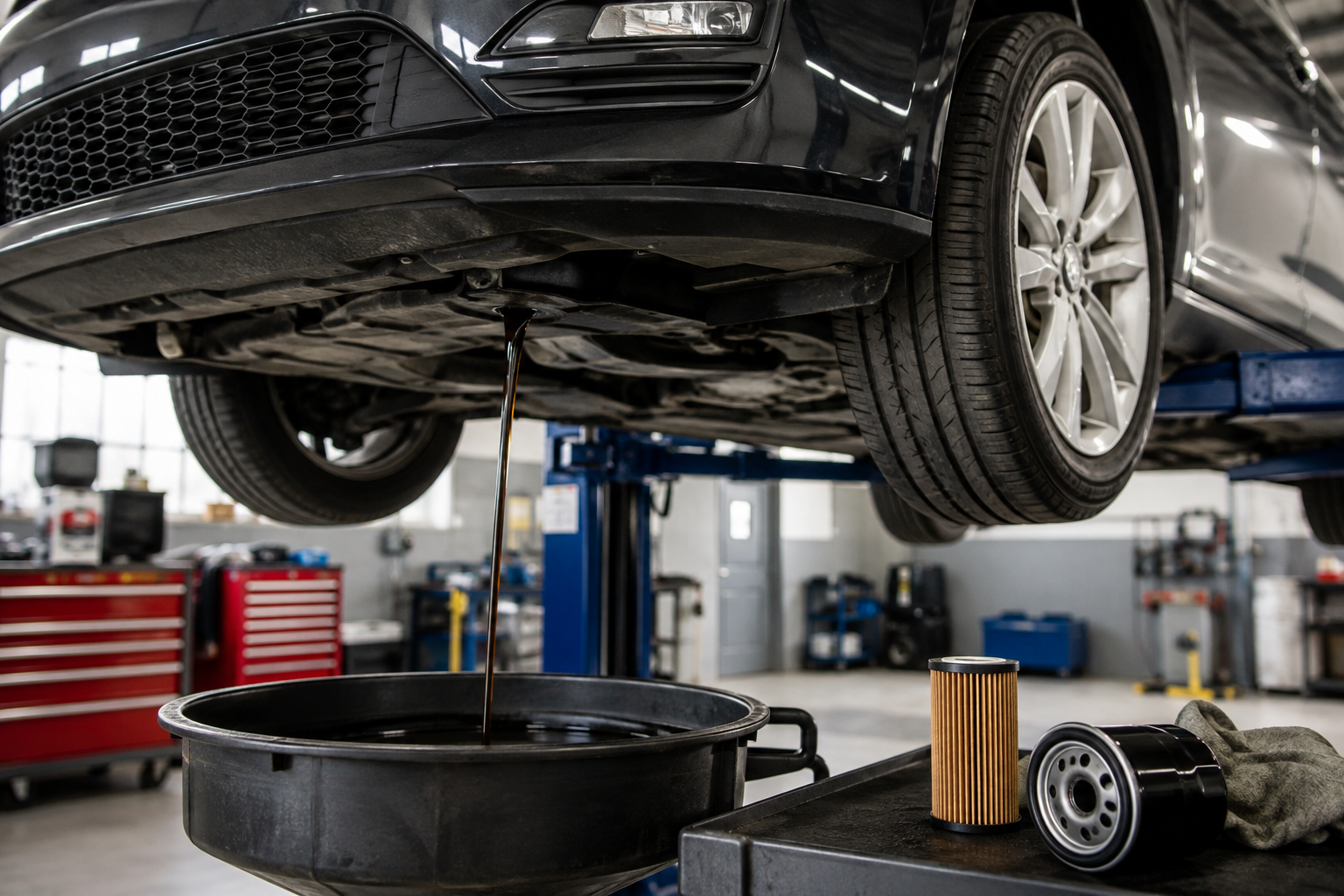
- Draining the old engine oil
- Installing a new oil filter
- Adding the correct grade and amount of fresh oil
- Checking the oil level after service
- Resetting the maintenance reminder when applicable
- Inspecting for visible leaks
- Reviewing selected fluid levels
- Checking tire pressure or basic vehicle condition
Ask what is included before service. You should also confirm the type of oil and filter being used.
The correct oil viscosity and specification are more important than choosing oil based only on price.
Conventional, Synthetic Blend, or Full Synthetic Oil?
The vehicle manufacturer’s requirements should guide the choice.
Conventional oil
Conventional oil may be appropriate for certain older vehicles or engines with simpler requirements. It generally needs to be changed more frequently than synthetic products.
Synthetic blend
A synthetic blend combines conventional and synthetic base oils. It can offer improved temperature stability and protection at a moderate price.
Full synthetic oil
Full synthetic oil is engineered for strong performance across a wide temperature range. It may resist breakdown longer and provide better protection in demanding conditions.
Do not switch oil types based on assumptions. Check the owner’s manual or ask a qualified service professional.
How Driving Conditions Affect Oil Life
Two drivers with the same vehicle may need different maintenance schedules.
Oil may require more frequent service under conditions such as:
- Repeated short trips
- Long periods of idling
- Stop-and-go traffic
- Towing
- Heavy loads
- Dusty roads
- Extreme temperatures
- Frequent cold starts
These conditions may fall under the manufacturer’s severe-service schedule.
Drivers in Connecticut should also account for seasonal temperature changes. Cold starts in winter and extended summer heat can both place additional demands on engine oil.
How to Keep Track of Oil Change Timing
A simple maintenance record helps prevent missed service.
You can track oil changes using:
- The vehicle’s oil-life monitor
- A windshield reminder sticker
- A calendar reminder
- A maintenance app
- Digital service records
- A notebook stored with vehicle documents
Record the date, mileage, oil type, and filter used. This information is useful for future maintenance and may support resale value by showing consistent care.
Frequently Asked Questions About Oil Changes
What are the most common signs you need an oil change?
Common signs include a dashboard reminder, dark or gritty oil, increased engine noise, reduced fuel economy, an oil smell, and an overdue service interval.
Can I drive with the oil change light on?
A routine maintenance reminder usually allows enough time to arrange service soon. A red oil pressure warning is more urgent and may require stopping the engine immediately.
How often should engine oil be changed?
Follow the vehicle manufacturer’s interval. Timing varies based on the engine, oil type, mileage, age, and driving conditions.
Does synthetic oil last longer?
Synthetic oil often resists breakdown longer than conventional oil, but you should still follow the manufacturer’s maintenance schedule.
Should the oil filter be changed every time?
In most cases, the oil filter should be replaced during every oil change so the fresh oil does not circulate through an old, contaminated filter.
Can an oil change stop engine noise?
It may reduce noise caused by old or low oil. Persistent knocking, tapping, or grinding requires professional diagnosis.
Schedule Oil Change Service Before Small Signs Become Larger Problems
Recognizing the signs you need an oil change helps you act before worn oil affects engine performance. Dashboard reminders, dirty oil, unusual sounds, burning smells, and declining fuel economy should not be ignored.
Routine oil and filter changes remain one of the simplest ways to support engine reliability and long-term vehicle ownership.
Branford Carwash and Express Lube makes it convenient to combine routine vehicle maintenance with professional car care. Visit the Branford Carwash website to explore oil change services, review available vehicle care options, or contact the team with questions about your maintenance schedule.
Latest Post
-
 Underbody Car Wash: Why Cleaning Beneath Your Vehicle Matters More Than You Think
October 6, 2026
Underbody Car Wash: Why Cleaning Beneath Your Vehicle Matters More Than You Think
October 6, 2026
-
 Express Oil Change Guide: Service, Oil Types & Best Practices
October 2, 2026
Express Oil Change Guide: Service, Oil Types & Best Practices
October 2, 2026
-
 Synthetic vs Conventional Oil: Pros, Cons & Cost
September 28, 2026
Synthetic vs Conventional Oil: Pros, Cons & Cost
September 28, 2026
